The last thing anyone wants to hear is that their building’s air conditioning or heating is out. HVAC shutdowns can disturb occupants, damage an owner’s reputation and halt operations. While unforeseen failures happen, mission-critical buildings like hospitals, data centers and research facilities cannot afford the risk of disruptions to temperature-sensitive spaces.
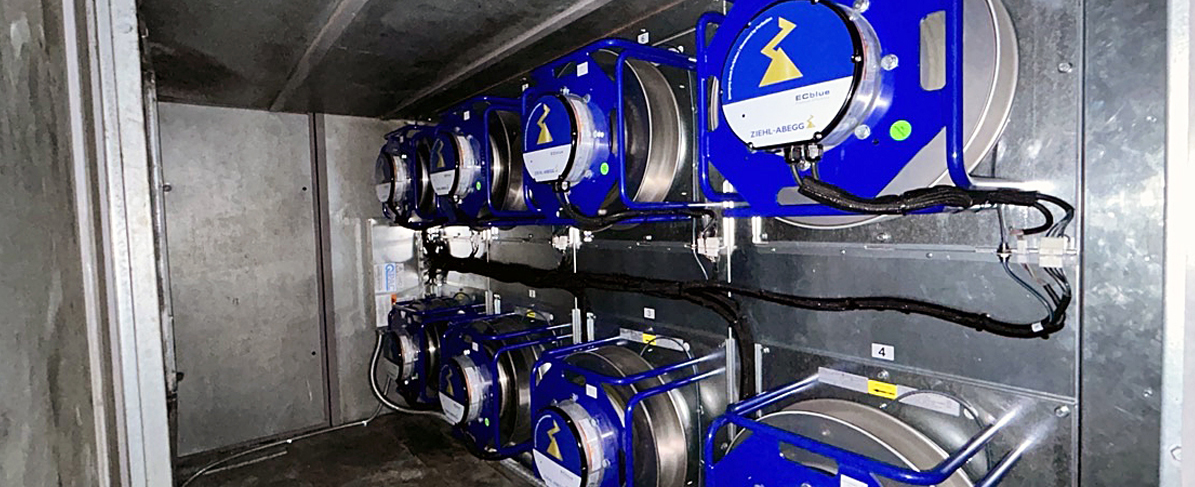
Thankfully, there are cost-effective restoration strategies to improve the reliability of heating, ventilation and air conditioning (HVAC) systems. Fan array retrofits represent one of the most impactful mechanical upgrades available for existing HVAC systems, in which the mechanical system’s workload is distributed across several smaller, redundant fans, instead of relying on one large fan.
Here are 6 ways that fan array redundancy gives facilities greater HVAC dependability, operational resilience and energy efficiency.
A fan array retrofit involves the strategic integration of multiple small fans arranged in a matrix configuration, rather than a single traditional centrifugal blower. In this conventional HVAC system, if the blower shaft, bearing or motor fails, the entire air handler unit (AHU) goes offline resulting in a complete system shutdown.
With fan wall redundancy however, the upgraded HVAC system adapts to changing conditions, so if one fan malfunctions, the others compensate to maintain the desired air circulation. The heating or air conditioning continues with no disruption.
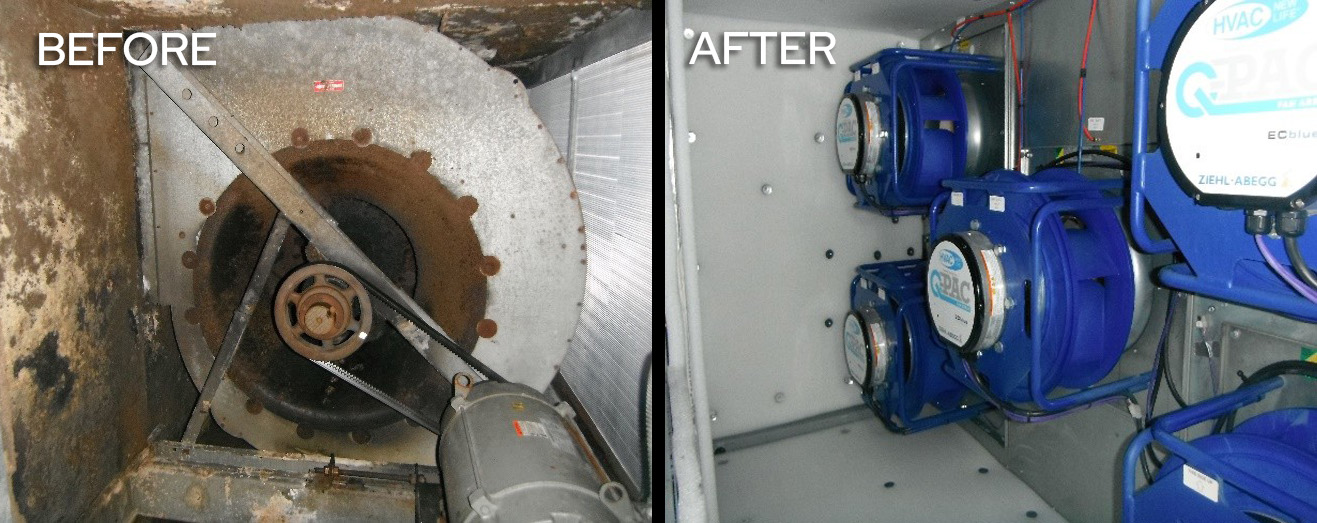
Fan redundancy minimizes the risk of downtime due to failure. Even if a fan within the wall malfunctions, the remaining fans persist, preventing interruptions to essential HVAC functions.
Fan array redundancy simplifies HVAC maintenance procedures and reduces costs. Technicians can replace or repair individual fans as needed, with no rush and without shutting down the entire system. This enables deferred maintenance scheduling and eliminates downtime and associated costs. Similarly, by modernizing existing AHUs, facilities can push multi-million-dollar replacement projects 10–15 years into the future.
The modular nature of fan wall systems allows for greater flexibility in HVAC system design. Engineers can tailor the configuration to specific facility requirements, optimizing space utilization and overall system performance.
Fan array redundancy enables the use of variable speed controls, allowing the system to adjust fan speeds based on current demand. This results in significant energy savings by avoiding maximum-capacity operations that also accelerate mechanical wear.
The distribution of fan wall systems enhances airflow management within the HVAC system. It ensures that conditioned air reaches its destination efficiently, reducing energy wastage and enhancing overall system performance.
Fan wall systems often integrate with advanced control systems that optimize performance based on real-time data. This intelligent control allows for precise adjustments, further contributing to energy efficiency and operational cost savings.
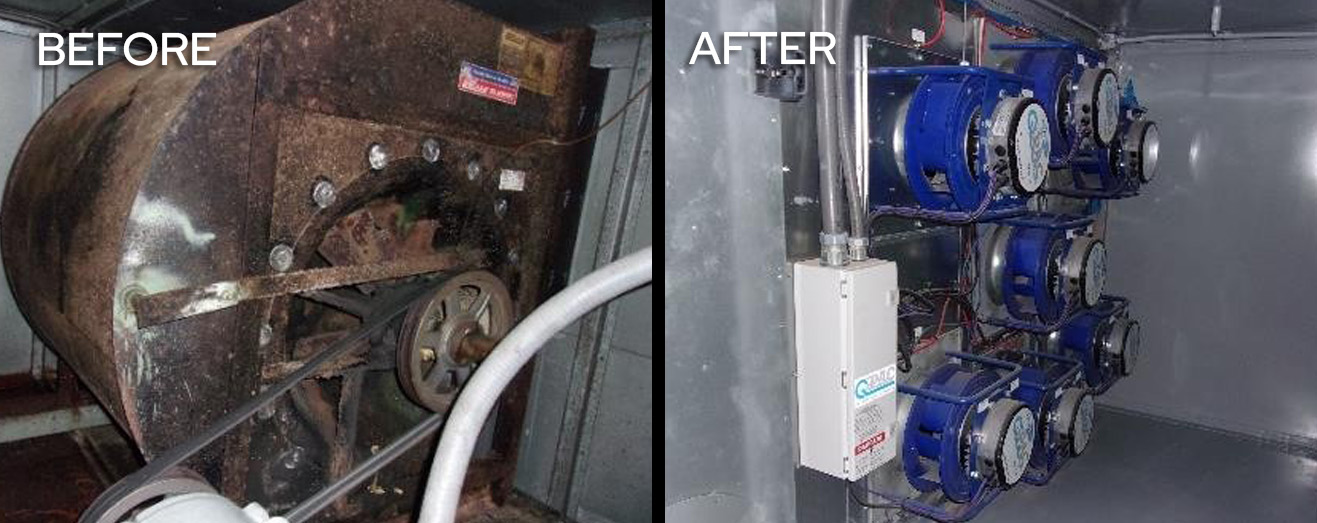
In the realm of heating, ventilation, and air conditioning systems, operational reliability is paramount. Therefore, as the demand increases for resilient and energy-efficient building systems, fan wall retrofits are a highly recommended component of HVAC restoration. Incorporating redundancy of fan arrays into HVAC systems not only safeguards against unexpected failures but also provides more sustainable and cost-effective building operations for decades to come.
For more information on WTI Pure Air’s custom-designed and installed fan arrays, contact us today.