15 Essential Energy and Financial Analyses for Commercial Roofing and Building Efficiency
Discover 15 essential energy and financial analyses for commercial roofing and building efficiency.

Discover 15 essential energy and financial analyses for commercial roofing and building efficiency.
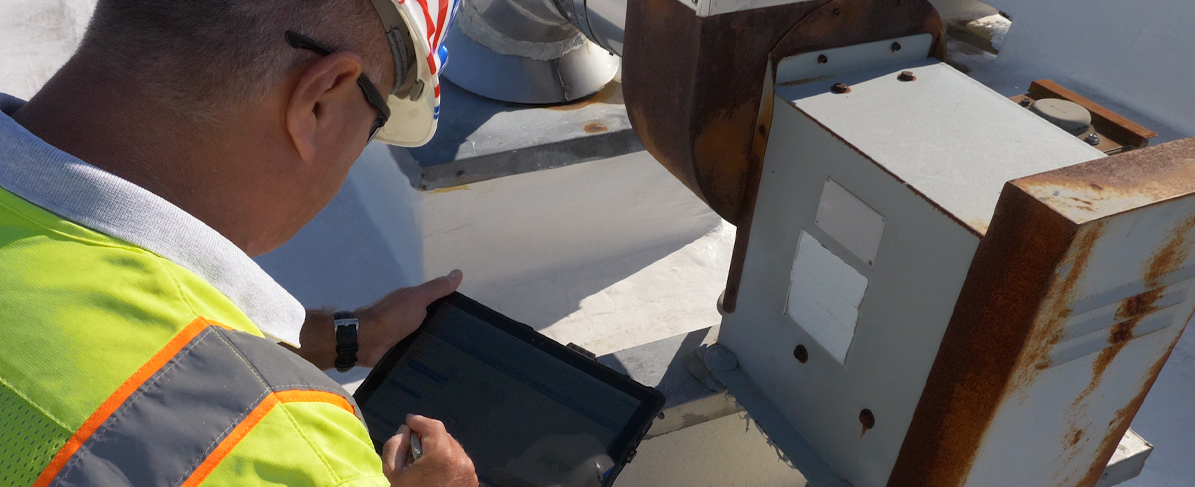
To maximize the service life and minimize operational costs of your roof and building at large, Tremco offers numerous energy consumption and cost-benefit evaluations to help you understand your remediation options and estimated outcomes. These energy usage and financial reports are invaluable tools to diagnose any building envelope issues and document the thermal performance, long-term cost avoidance and ROI of various building upgrades.
Take a look at these 15 roof and building analyses that can be combined and customized to inform the next steps of your building repairs and maintenance.
Contact Your Local Rep to Get Started!
1. Roof Energy & Lifecycle Analysis (With and Without Solar PV)
2. Building Weatherization (Air Leakage) Energy Analysis
3. Building Envelope/Roof Moisture Source Analysis
4. Dewpoint and Condensation Analysis of Roofs
5. Tremlock T-138 Retrofit Energy & Lifecycle Analysis
6. Protected Membrane Roof Energy & Lifecycle Analysis
7. Vegetative (Green) Roof Energy & Lifecycle Analysis
8. Landfill Diversion Calculations
9. Wet Roof Insulation Analysis
10. TremCare Financial Analysis
11. Initial & Energy (Whole Building) Evaluation Reports
12. Air Handler & RTU Restoration Solutions Energy & Lifecycle Analysis
13. Rooftop HVAC Intake & Condenser Energy Analysis
14. Insulated Concrete Form (ICF) Energy, Lifecycle & Sustainability Analysis
15. EIFS Retrofit Energy Analysis
 1. Roof Energy & Lifecycle Analysis (With and Without Solar PV)
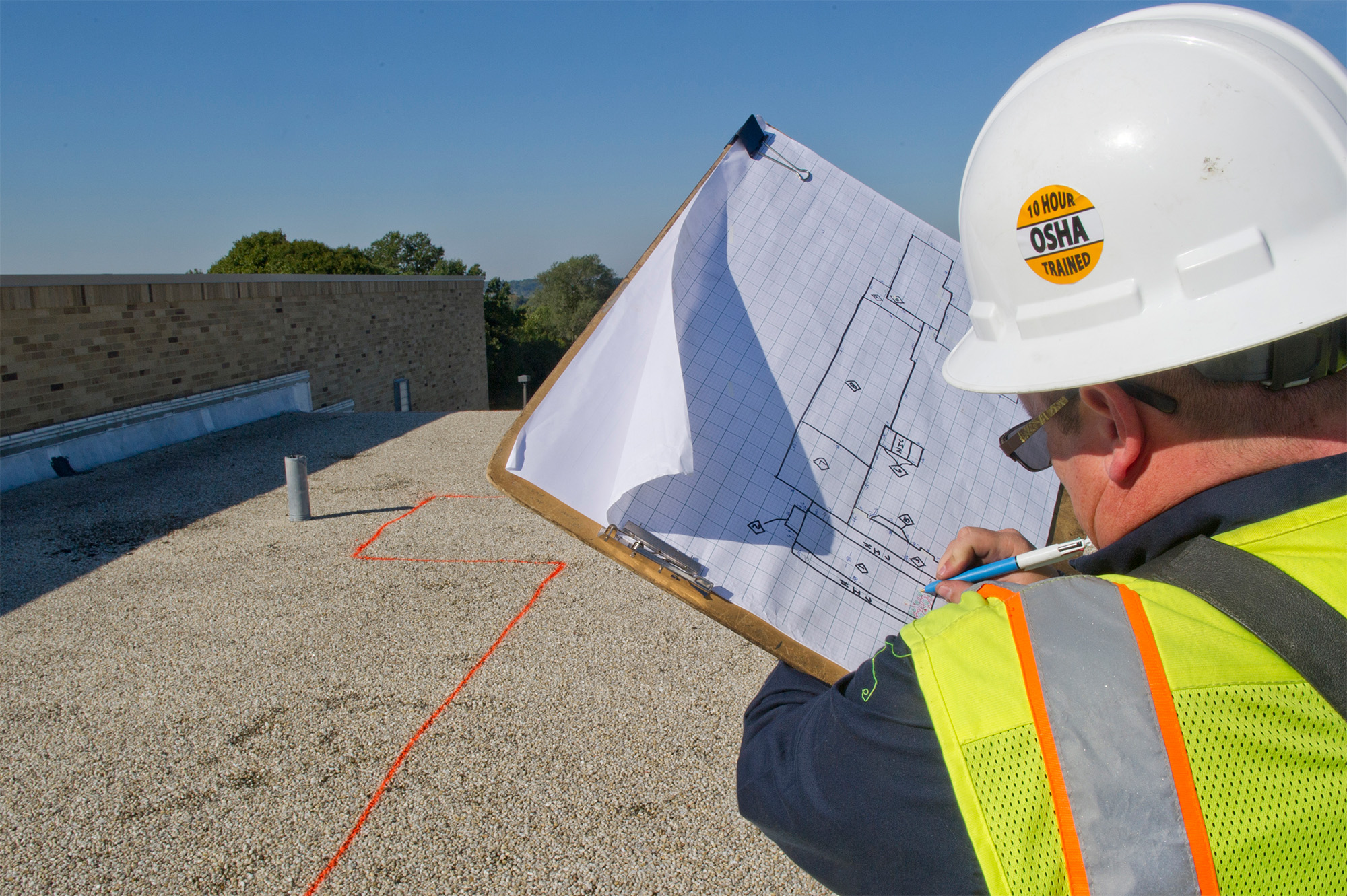
This report utilizes roof energy savings and lifecycle financial analyses to compare sustainable roof system options for your building, so you can make a more informed decision. For example, taking the size, location and current condition of your roof, it can evaluate the costs and payback periods for different roofing technologies, as well as the timelines for restoration versus replacement options.
This roof energy model uses local weather data to predict year-round roof surface temperatures and estimate annual energy use reduction by taking into account all three forms of heat transfer: radiation, convection and conduction. The lifecycle analysis can even factor in elements like maintenance costs, future cash flow and inflation.
Facilities with photovoltaic (PV) panels or those seeking the addition of PV can also have those lower utility costs and energy usage incorporated into the data.
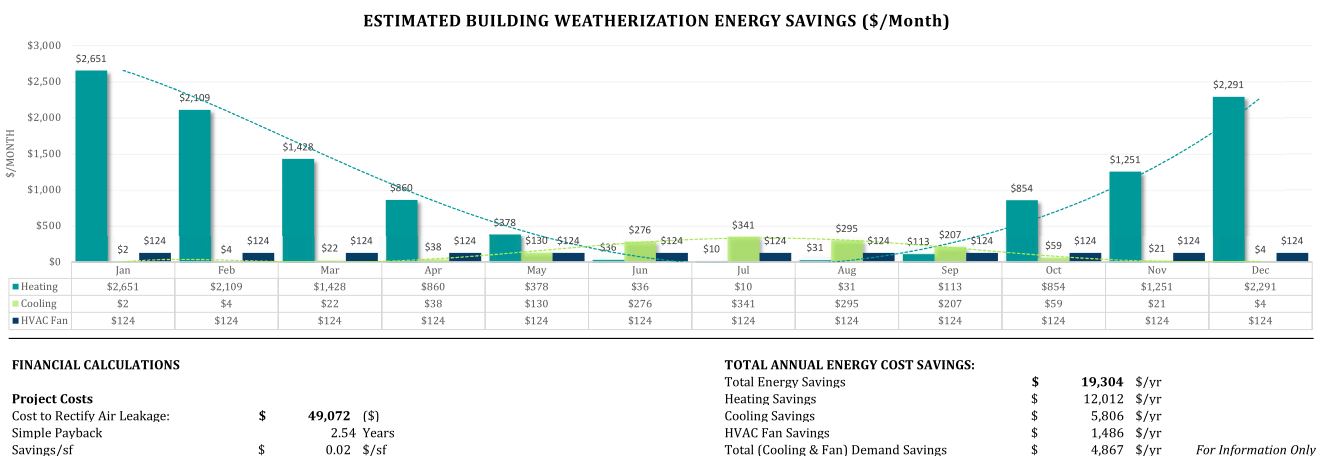
Tremco’s Building Weatherization service features an on-site assessment that reviews the facility’s building envelope for air leakage, including at the roof-to-wall connection, which is a common source for problems like roof delamination and roof billowing in high winds. Based on the project location, size, roof condition and HVAC system, we can also provide the estimated annual energy savings and cost-benefit analysis of air sealing solutions, such as roof repairs, window replacement and improved exterior insulation.
This problem-solving analysis is very unique in that it incorporates key building-specific data points and variables to help determine the cause of moisture in the exterior building envelope. If a structure experiences issues such as condensation, roof leaks, excessive humidity, façade or foundation failures or mold growth, a Building Envelope/Roof Moisture Source Analysis can be a critical tool to find the source of the problem and propose possible solutions.
A dewpoint analysis estimates the dewpoint temperature and where the dewpoint temperature line will fall within a given roof assembly. Dewpoint temperature is the temperature at which air reaches 100% relative humidity, meaning it cannot hold any additional moisture. Any surplus moisture or temperature decrease will cause moisture in the air to precipitate or condense onto adjacent surfaces.
Due to the larger temperature differences that exist during winter, dewpoint normally occurs within the roof assembly’s thermal insulation, so this data can confirm if problematic water infiltration is the result of dewpoint condensation, a roof leak or other issue. This process can save a lot of time leak-chasing and help extend the roof lifespan by uncovering issues before they get worse.
To examine the water vapor pressures in the roof assembly through the year and estimate when the roof assembly will be in condensation or evaporation mode, the condensation model can recommend whether an air or vapor barrier should be installed in a proposed or existing roof assembly. The data can be adjusted to look at the impacts on roof vapor drive resulting from roof membrane colors, relative humidity and temperature, stack effect pressure and permeability. Note that this analysis only applies to water vapor diffusion and not air leakage, as the rate of condensation due to air leakage is exponentially higher.
 5. Tremlock T-138 Retrofit & Lifecycle Energy Analysis
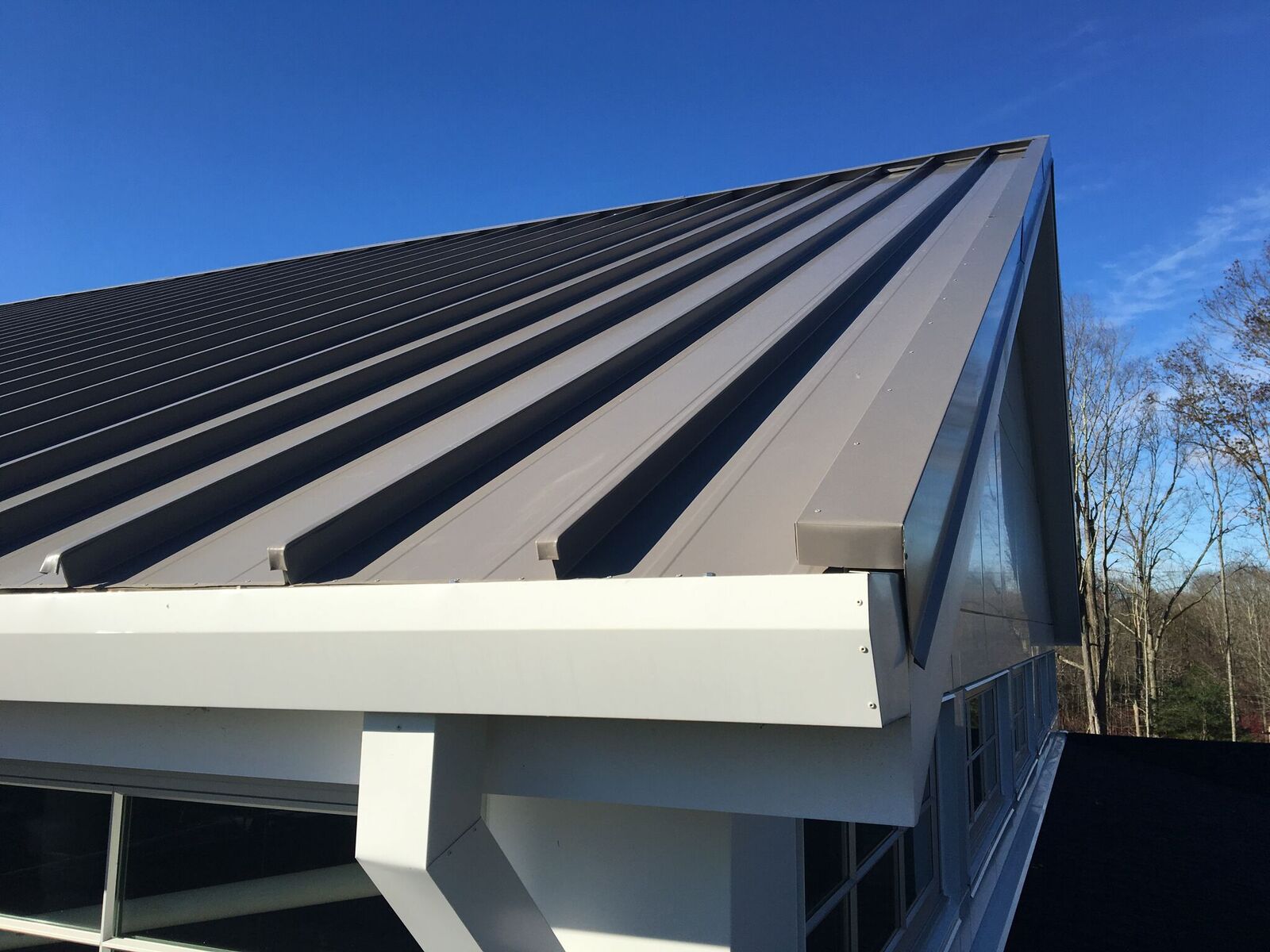
 For those considering a metal roof retrofit using the TremLock® T-138 system, this energy analysis calculates the financial benefits of this metal roof solution compared to perpetually replacing asphalt shingles.
The analysis graphically shows how the Above-Sheathing-Ventilation (ASV) design yields additional energy improvements and illustrates how the longevity associated with the T-138 retrofit system yields future cost savings as opposed to asphalt shingle roof replacements every 15 or 20 years. The energy model is based on the Oakridge National Laboratories (ORNL) study on “Natural Convection Heat Transfer in Roofs with Above-Sheathing Ventilation”.
This energy analysis compares a Protected Roof Membrane (PMA) or Inverted Roof Membrane Assembly (IRMA) roof configuration versus a traditional roof replacement. It showcases how these roofing solutions are a better financial decision through substantial cost avoidance and by extending the service life of the roof, which helps offset the higher initial roof cost.
To estimate the energy savings associated with a vegetative or green roof, new and existing buildings should consider this new energy analysis! This study can customize the proposed roof design to vary the insulation thickness and type, soil depth, building height, HVAC efficiencies, energy unit cost and more to see the potential impacts.
For the sustainability-conscious, the landfill diversion calculation estimates the reduction in greenhouse gas (GHG) emissions and waste for various roof restoration and replacement options. Landfill diversion calculations consist of three main areas of savings:
 9. Wet Roof Insulation Analysis
The effectiveness of thermal insulation can be severely degraded with the presence of moisture, so this analysis estimates the R-value of a roof area with wet insulation. Then, we calculate the expected reduction in energy consumption and lessened utility costs of the building from either replacing or drying out the insulation. This information can therefore justify the cost of further roof diagnostics or subsequent repair work.
A roof maintenance plan is a huge advantage to maximize the life of your restored roof. The TremCare Financial Analysis highlights the cost savings between a TremCare maintenance program with a Tremco roof restoration versus a standard roof replacement scenario. It plots elements including replacement and restoration completion timelines, total project costs, lifecycle costs and cost of ownership with probable interest and inflation rates.
Complementing these roof and energy analyses, Tremco offers additional investigative tools to assist you and your facility.
This energy analysis takes a whole building approach to audit entire building energy usage, including but not limited to lighting, heating, cooling, ventilation, water, roof performance and exterior wall efficiency. This data helps understand the current state of the facility and see where potential cost savings can help fund energy improvements, such as a roof restoration, HVAC system retrofit or building envelope upgrade. Schools, hospitals, data centers, factories and other large facilities can especially benefit from the information provided by this FREE energy audit.
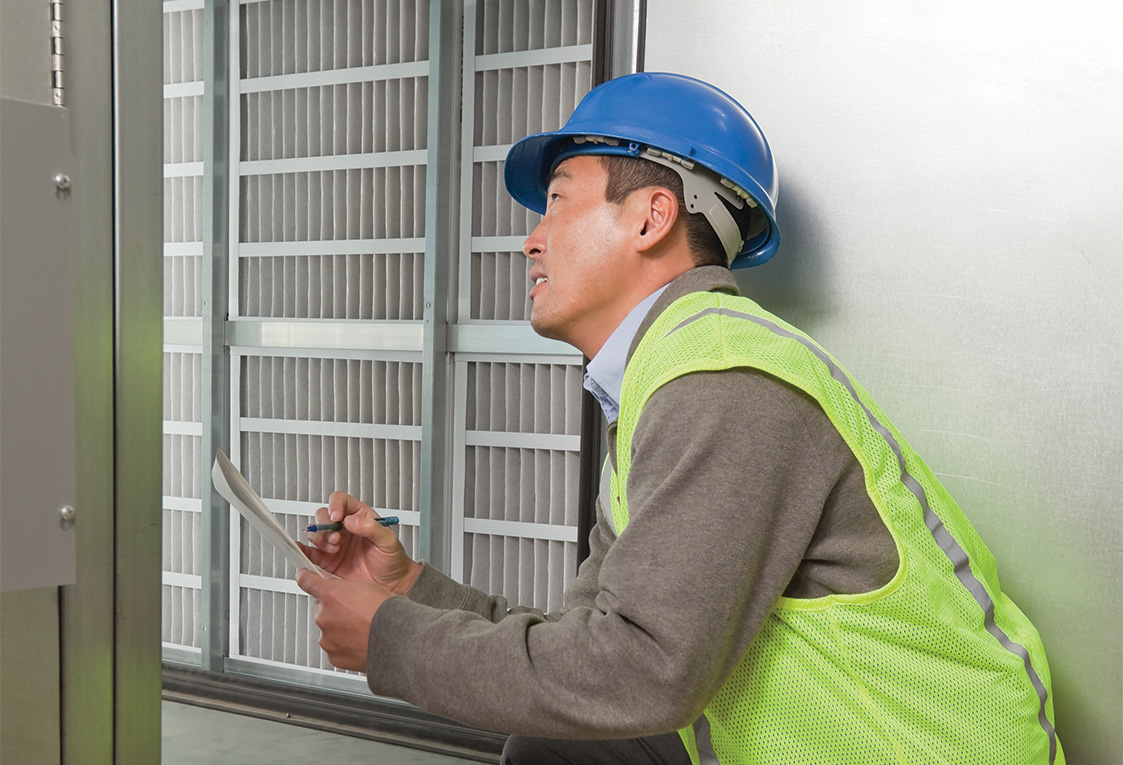
As HVAC systems age, restoring components may be a better long-term financial option compared to a full HVAC replacement. This analysis calculates the energy usage savings and utility cost reduction associated with HVAC steam cleaning and a fan array retrofit from WTI Pure Air.
The HVAC report also incorporates 25-year lifecycle cost savings for the proposed air handler unit (AHU) or HVAC rooftop unit (RTU) restoration versus a traditional HVAC replacement.
 13. Rooftop HVAC Intake & Condenser Energy Analysis
This report estimates the potential annual energy savings associated with reducing the outdoor air temperature that enters an existing air handler or rooftop unit located directly above a roof membrane, by changing the roof color from dark to light.
The darker the roof membrane, the hotter it will get. By recoating the roof to white or a lighter color, the roof surface will cool, causing the rooftop HVAC to not have to work as hard to cool the building.
For new construction projects, our thermal mass wall energy analysis measures heat flow through a Nudura ICF wall of various configurations versus wood frame or masonry block construction for the same blueprint and climate. This ICF energy data is converted into a financial lifecycle and sustainability analysis and reveals the impact of property insurance and maintenance cost savings associated with this highly durable building method.
This façade analysis approximates the annual energy cost savings for retrofitting an existing building’s exterior wall with a Dryvit Outsulation® Exterior Insulation Finishing System (EIFS). The data also conveys the optimal R-value of the insulation for maximum ROI.
Performing energy and financial analyses of building assets is a smart step toward significantly reducing costs on your building operation and maintenance. These evaluations can not only uncover hidden inefficiencies but also provide actionable insights to optimize your building envelope’s performance. This data around sustainability and financial savings is critical before deciding between building and roof restoration solutions. Contact your local Tremco representative today to explore these customizable energy reports and recommended remediation steps.